Wondering what sets a rockabilly track apart? The core rockabilly characteristics are a slapped upright bass, twangy hollow-body guitar, a stripped-down drum kit, vocal twang and plenty of tape echo.
This guide is part of our wider look at rockabilly music.
| Item | Value |
|---|---|
| Era of origin | Early 1950s |
| Region of origin | The United States, especially the South |
| Classic instruments | Hollow-body electric guitar, upright bass, pared-down drum kit |
| Slap bass in country styles | A staple since the 1940s |
| Name origin | Blend of “rock” and “hillbilly” |
| “Blue Suede Shoes” recorded | December 19, 1955, at Sun Records |
These figures come from Wikipedia’s rockabilly entry. Details can change, so check the source before you rely on them.
Rockabilly characteristics start with a country and blues blend
Rockabilly is one of the earliest styles of rock and roll, and it mixes country with rhythm and blues. That mix is the root of nearly everything else you hear in it.
The name itself is a portmanteau of “rock” and “hillbilly”, a nod to country music. Other influences include:
- Western swing
- Boogie-woogie
- Jump blues
- Electric blues
- Bluegrass, often cited for its fast tempos
So when a song sounds like a country band playing the blues at speed, you are probably hearing rockabilly.
The result is a style that feels both rooted and restless. The songs often borrow country phrasing and storytelling, then push them forward with a blues-driven backbeat. That tension between rural twang and urban rhythm is what gives the genre its identity.
The classic instruments
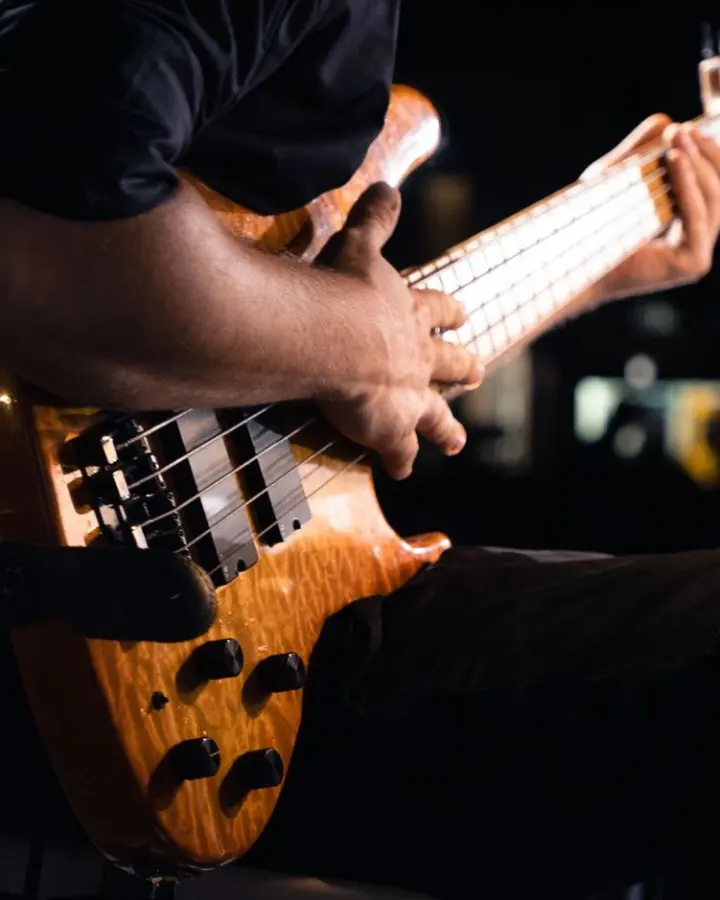
The typical rockabilly setup is lean. Wikipedia lists a hollow-body electric guitar, an upright bass and a pared-down drum kit as the classic instruments.
Each part has a clear job:
- Lead guitar: bright, twangy and country-flavoured, often playing short, punchy licks rather than long solos.
- Rhythm guitar: keeps a steady chug underneath, sometimes on an acoustic.
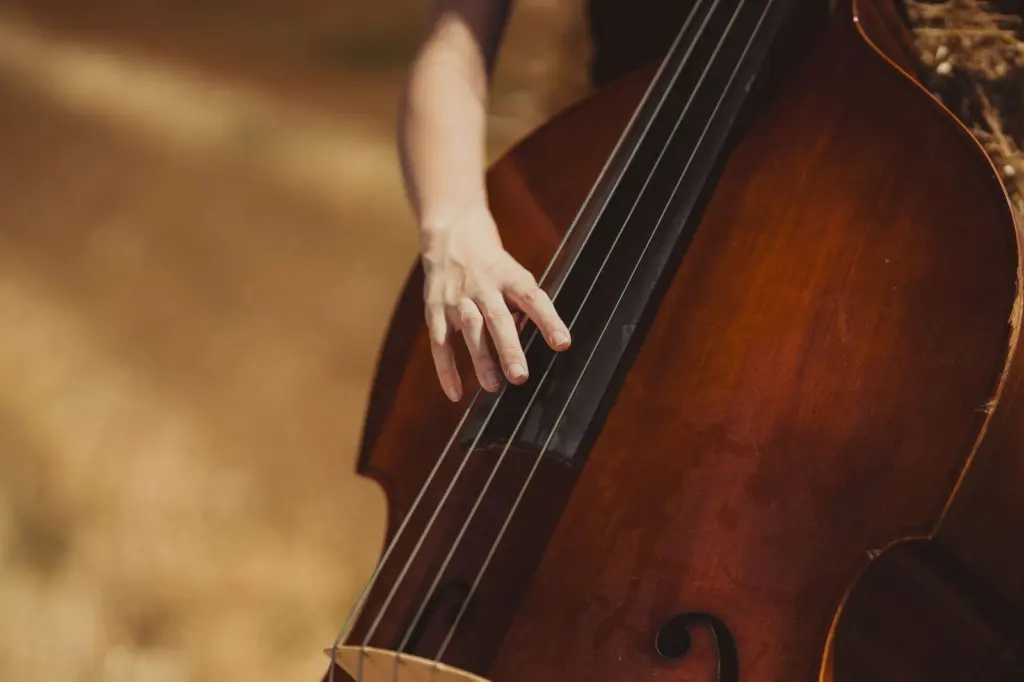
- Upright bass: supplies pitch and percussion in one instrument.
- Drums: kept simple, since the bass and guitars already drive the rhythm.
Some records add boogie-woogie piano, which Wikipedia counts among the defining features of the sound. Where a piano appears, it tends to rattle along in the same rolling pattern as the guitar, adding energy rather than polish.
Because there are so few instruments, every part is exposed. A weak bass line or a sloppy rhythm guitar has nowhere to hide, which is why good rockabilly players are usually very tight. If you want to go deeper on the kit, see our guide to rockabilly drumming.
Slap bass and driving rhythm
The slapped upright bass is the most recognisable rhythmic signature. Players pull strings back against the fingerboard and may strike them with the hand to create percussive patterns.
The technique was not invented for rockabilly. According to Wikipedia, Western swing and hillbilly boogie musicians were regularly using slap bass by the 1940s. Rockabilly adopted this percussive bass technique.
The result is a bouncy, forward-leaning feel. Strong rhythm defines the style more than virtuoso soloing does.
This is also why the drum kit can stay small. The slapped bass acts as a second snare, so the drummer can keep things light, and the whole band bounces on the same pulse.
Echo, twang and attitude
Wikipedia lists vocal twangs, doo-wop a cappella influence and common use of tape echo among the defining features. Echo made small studio bands sound bigger and more urgent.
The vocals are the other half of the sound. Singers lean into a Southern twang and often add hiccups, stutters and sudden shouts. The delivery feels loose and a little wild, even when the band is tight.
You can hear the production approach on early Sun Records releases. Elvis Presley began recording in Memphis at Sam Phillips’s Sun Records. Carl Perkins recorded “Blue Suede Shoes” there on December 19, 1955.
Doo-wop singing is an easy influence to miss. Some rockabilly records use close vocal harmony or a cappella passages, a reminder that the style drew from more than country alone.
Where the sound came from
Rockabilly did not appear from nowhere. It grew out of the country and blues records that Southern musicians were already making, and the Memphis scene pulled those threads together.
According to Wikipedia, Phillips already had several years of experience producing local country and blues recordings when Presley arrived. That background explains why early rockabilly can sound like a country record and a blues record at once.
It also explains the repertoire. Presley’s early singles paired blues and country songs, so listeners heard both roots in a single release.
These habits carried over from those roots and still mark the style today:
- Fast tempos borrowed from bluegrass and hillbilly boogie.
- Shuffling, swung rhythm from Western swing and jump blues.
Understanding these roots makes the sound easier to spot. When a modern band plays rockabilly, it is usually reviving exactly this mix of country snap and blues drive.
What to listen for in a recording
Once you know the parts, you can pick them out on almost any record. Try listening several times, focusing on one instrument per pass.
- First pass: follow the bass and listen for the percussive slap.
- Second pass: follow the lead guitar and notice how short and twangy its phrases are.
- Third pass: listen to the drums and see how little they do.
- Final pass: focus on the voice and the echo wrapped around it.
Notice also what is missing. There is rarely a wall of sound, a layered string arrangement or a heavily distorted guitar. The charm lies in space, snap and a sense that the band is playing live in one room.
How to tell it from nearby styles
Rockabilly sits close to country, blues and rock and roll, so the edges blur. A few quick checks help:
- Listen for slapped upright bass rather than an electric bass.
- Check whether the drums stay sparse and the guitar does the talking.
- Notice the echo and the twangy, hiccuping vocal.
- Ask whether it feels like country played with blues energy.
None of these is a strict rule, and many records mix them. Think of them as clues that add up. For a fuller comparison, read our piece on rockabilly vs rock and roll.
Frequently asked questions
What are the main rockabilly characteristics?
Show answer
Slapped upright bass, twangy hollow-body guitar, sparse drums, vocal twang and tape echo, all built on a country and rhythm and blues blend.
Is the drum kit always present?
Show answer
Wikipedia describes a pared-down drum kit as one of the classic instruments, so drums are common but kept minimal.
Where does the word rockabilly come from?
Show answer
The name combines ‘rock’ with ‘hillbilly’, a term associated with country music.
When did rockabilly begin?
Show answer
Rockabilly emerged in the American South during the early 1950s.