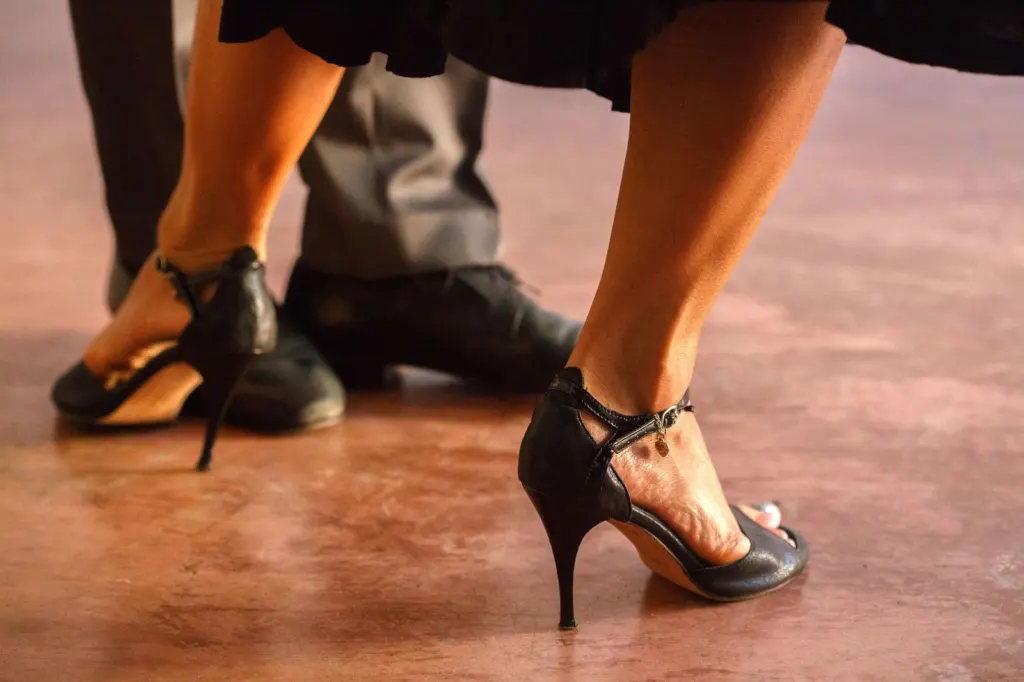
Worried you’ll freeze when the band kicks in? The core rockabilly dance moves are simple: a rock step, two small triple steps, and a steady bounce. Learn those and you can jive to most rockabilly songs.
This guide sits inside our wider look at rockabilly style, where the dancing, clothes and attitude all fit together.
| Item | Value |
|---|---|
| Common beginner count for jive | 1-2, 3-a-4, 5-a-6 |
| Beginner pattern | A rock step followed by two chasse or triple-step actions |
| Competition tempo reference (ballroom jive) | About 168-176 beats per minute |
| Lindy Hop first named | 1927 |
| Lindy Hop basic foot pattern | Eight beats |
| Harvest Moon Ball’s Lindy Hop category renamed “Jitterbug Jive” | 1942 |
Figures come from Ballroom Pages’ jive guide and John Sweeney’s history of jive. They can change, so check the sources before you rely on them.
What counts as rockabilly dance moves?
There is no single official rockabilly dance. Most dancers at rockabilly nights borrow from jive, jitterbug, rock and roll and swing, and they mix those with their own improvised moves.
That is not a shortcut. The family tree is real: Lindy Hop was first named as such in 1927, and its descendants shaped how people danced to rock and roll later on.
Sweeney’s history also notes the naming was always messy. These related dance styles have overlapping names, whose meanings vary by place and community. So don’t worry about getting the label right. Get the rhythm right.
The basic step: rock step plus two triples
The jive basic is often counted 1-2, 3-a-4, 5-a-6, with a backward rock and recovery before two triples. Say it out loud as “rock, step, triple, triple”.
The same guide breaks it down in plain language:
- 1-2 is the rock step: a small step back, then weight returns to the other foot.
- 3-a-4 is a chasse, or triple action: three quick weight changes, usually to the side.
- 5-a-6 is a second chasse, often back the other way.
Even though the pattern is taught across six counts, the same guide says the music is organised in groups of four beats. That mismatch is why beginners feel lost at first. Keep listening for the steady backbeat and let your feet catch up.
Step-by-step: your first minutes on the floor
You need a partner or a patient wall mirror. Wear shoes that slide a little, not rubber trainers that grip.
- Stand tall, knees soft, weight slightly forward on the balls of your feet.
- Walk the rock step slowly without music. Back, then forward.
- Add the first triple to the side: step, close, step.
- Add the second triple back the other way.
- Repeat the whole pattern until it flows, then try it with a record.
The same guide suggests you try the count without music first, so the tempo can’t hurry you.
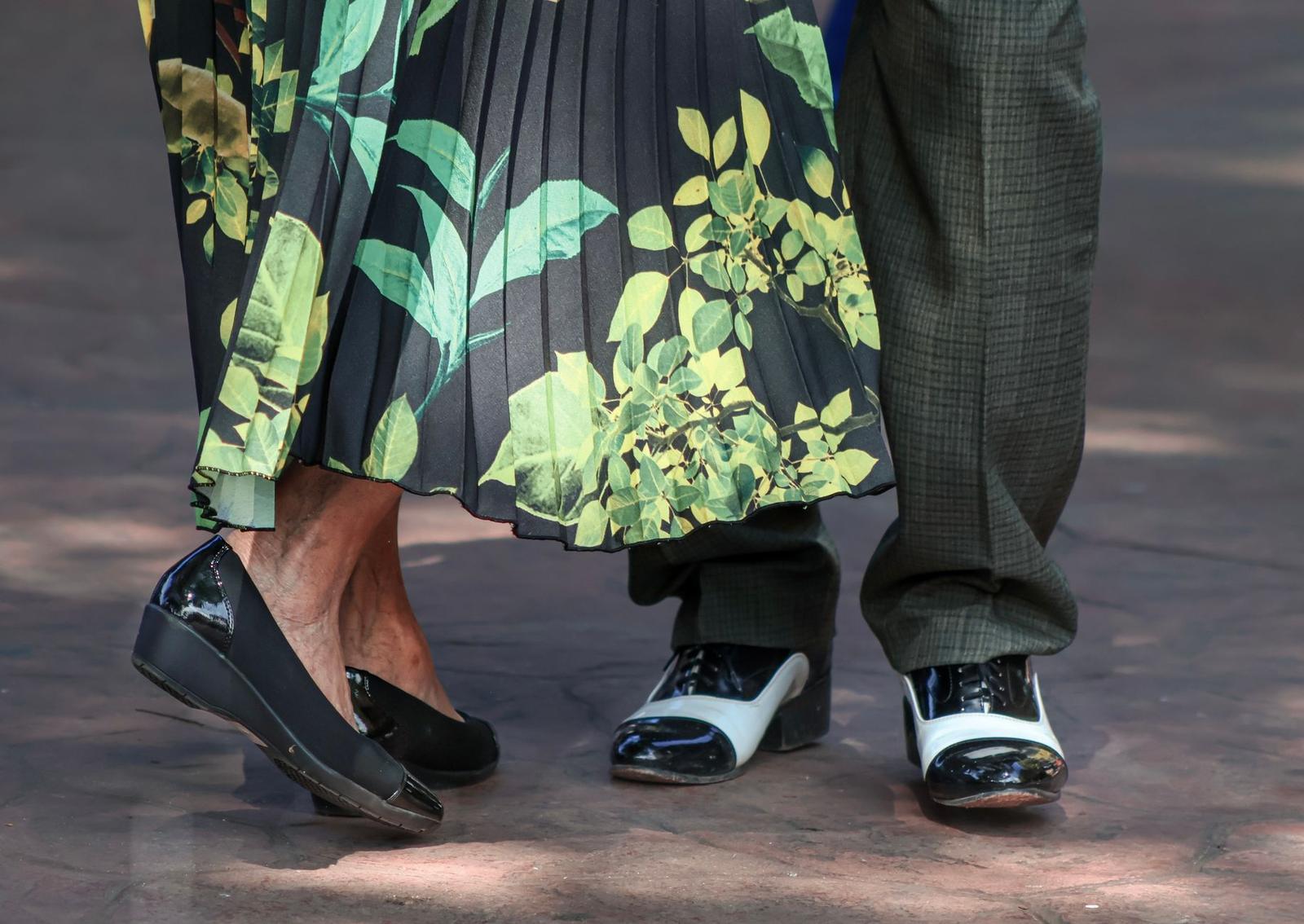
Keep it small before you add flair
Ballroom Pages advises: “learn the rock step and two compact chasses before adding big kicks or flicks.” Rockabilly floors are crowded and fun, so small, tidy movement is also polite.
Once the base is steady, add one extra at a time:
- Learn a separately taught kick or flick variation once your basic timing is secure.
- A gentle hip bounce that keeps time with the bass.
- A turn for your partner, led with a light hand and raised arm.
The guide calls the biggest beginner mistake “trying to make jive look exciting by traveling too much.” Stay near your spot, stay relaxed, and let the bounce carry you.
One more detail helps your timing. Lindy Hop grew out of an eight-beat basic foot pattern of 1, 2, 3 & 4, 5, 6, 7 & 8, while the ballroom jive basic described here uses six counts and includes triple steps.
If you are ever unsure which count a teacher means, ask. It is a normal question, and clear counting saves a lot of confusion, especially when you are learning alongside other beginners.
Tempo and music: what to practise to
The same source gives a competition reference for ballroom jive of about 168-176 beats per minute. That is fast, and it is a ballroom competition figure, not a rule for rockabilly dancing.
Start with a slower song, get comfortable, then move to faster ones when your triples stop feeling like a scramble.
Don’t try to match a fast record on your first night. Dancing the pattern in half time, with relaxed rocks and smaller triples, is perfectly fine.
Floor manners and a practice routine
A rockabilly night is social. A few habits keep everyone happy and safe, and they cost nothing to learn.
- Check the space around you before a kick, a spin or a turn.
- Keep to your own patch of floor and avoid cutting across other couples.
- Ask politely, accept a “no” gracefully, and thank your partner after the song.
- If you lose the count, go back to the basic bounce and rejoin on the next rock step.
- Take water breaks, because the rhythm is more tiring than it looks.
The same guide’s practice plan starts with clapping and saying “rock, replace, tri-ple-step, tri-ple-step”. After that it moves to stepping the rhythm in place, then adding compact side chasses.
That order works because each layer is only one new thing. Clap it, step it in place, travel a little, then add a partner. Short, frequent sessions in the living room beat one long, exhausting session before a gig.
When you start dancing with others, focus on connection, not fancy steps. A relaxed frame, clear signals and a smile make a simple basic look great. Nobody on a rockabilly floor expects perfection, and most dancers remember how they felt as beginners.
What to wear so you can actually move
Dancing is the quickest way to test an outfit. Skirts need room for the kicks and turns, and shoes need a smooth sole and some support.
If you want ideas, our guides to rockabilly dresses and rockabilly fashion women cover cuts and styling. Look for full skirts, stretch in the bodice, and shoes that stay on when you spin.
For anyone, light breathable fabric is a better friend than heavy denim once the floor warms up.
Frequently asked questions
Is there a specific rockabilly dance?
Show answer
Not one official dance. Dancers mix jive, jitterbug, rock and roll and swing, plus their own improvisation, as the history of jive shows with its many names.
Do I need a partner?
Show answer
No. You can practise the rock step and triples on your own, and many people dance solo at gigs. A partner adds turns and hand holds later.
How is jive different from swing?
Show answer
Ballroom Pages frames ballroom jive as faster and more syncopated than East Coast swing. For a beginner, the footwork feels very similar, so start with the basic count.
Should I learn kicks first?
Show answer
No. Start with the rock step and two small chasses, then add kicks and flicks once the rhythm is reliable.