Wondering which rockabilly tattoos fit your look? Most borrow from old sailor flash: pin-ups, swallows, dice, roses and anchors, drawn with bold outlines and solid colour.
This guide sits inside our wider look at rockabilly style.
| Item | Value |
|---|---|
| Key figure behind the look | Norman Keith “Sailor Jerry” Collins |
| Collins’s lifespan | 1911 to 1973 |
| Designs he reworked | 1920s-1930s designs |
| His last studio | 1033 Smith Street, Honolulu’s Chinatown |
| First patented electric tattoo machine | December 8, 1891 (Samuel O’Reilly) |
Biographical details come from Wikipedia’s Sailor Jerry entry and its Samuel O’Reilly entry. Figures and facts can change, so check the source before you rely on them.
Where rockabilly tattoos come from
Rockabilly tattoos are not a separate art form. They often draw on American traditional tattooing, also called old school, alongside mid-century music and fashion.
The style grew out of sailor tattoos. Seafarers carried images of home, luck and love, and tattooists turned the popular ones into repeatable flash sheets that a customer could point at and pick.
Sailor imagery was an influence on the style. Ports gave tattooists a steady stream of customers who wanted something durable to carry home, and the imagery reflected life at sea: danger, distance, luck and the people left behind.
When rockabilly fans picked the style up, they inherited all of that. A heart with a banner, a pin-up or a swallow still reads as a nod to a working-class, hard-living past, and that attitude suits the music.
That is why the look is so recognisable. Flash was designed to be quick to apply and easy to read, so it relies on thick black outlines, a small colour palette and simple shading.
The machine that made flash practical
Hand-poked work gave way to machines late in the nineteenth century. Samuel O’Reilly, an Irish American tattoo artist from New York, patented the first electric tattoo machine on December 8, 1891, according to Wikipedia.
According to the entry, O’Reilly adapted a dental instrument for tattooing and used it on dime-museum performers during 1889–1891, before receiving his patent. Wikipedia adds that tattoo machines kept evolving from then into the modern tattoo machine.
Faster, cheaper tattooing mattered for the style. A busy shop near a port could work through many customers a day using a stock of proven designs.
Sailor Jerry and the Honolulu connection
Norman Keith Collins, known as Sailor Jerry, is the name most linked to the look. Wikipedia identifies him as an early contributor to American traditional tattooing. He was born in Reno in 1911 and died in 1973.
He worked in Honolulu, where his last studio was at 1033 Smith Street in Chinatown. His earlier shops included addresses on South State Street and North and South Hotel Street.
Wikipedia says he developed designs with inspiration from sailor tattoos and Japanese tattoos. He combined older flash from the 1920s and 1930s with elements of Japanese tattoo art.
The same page notes his shop was one of the first to use an autoclave to sterilise equipment. That detail is a useful reminder when you choose an artist today.
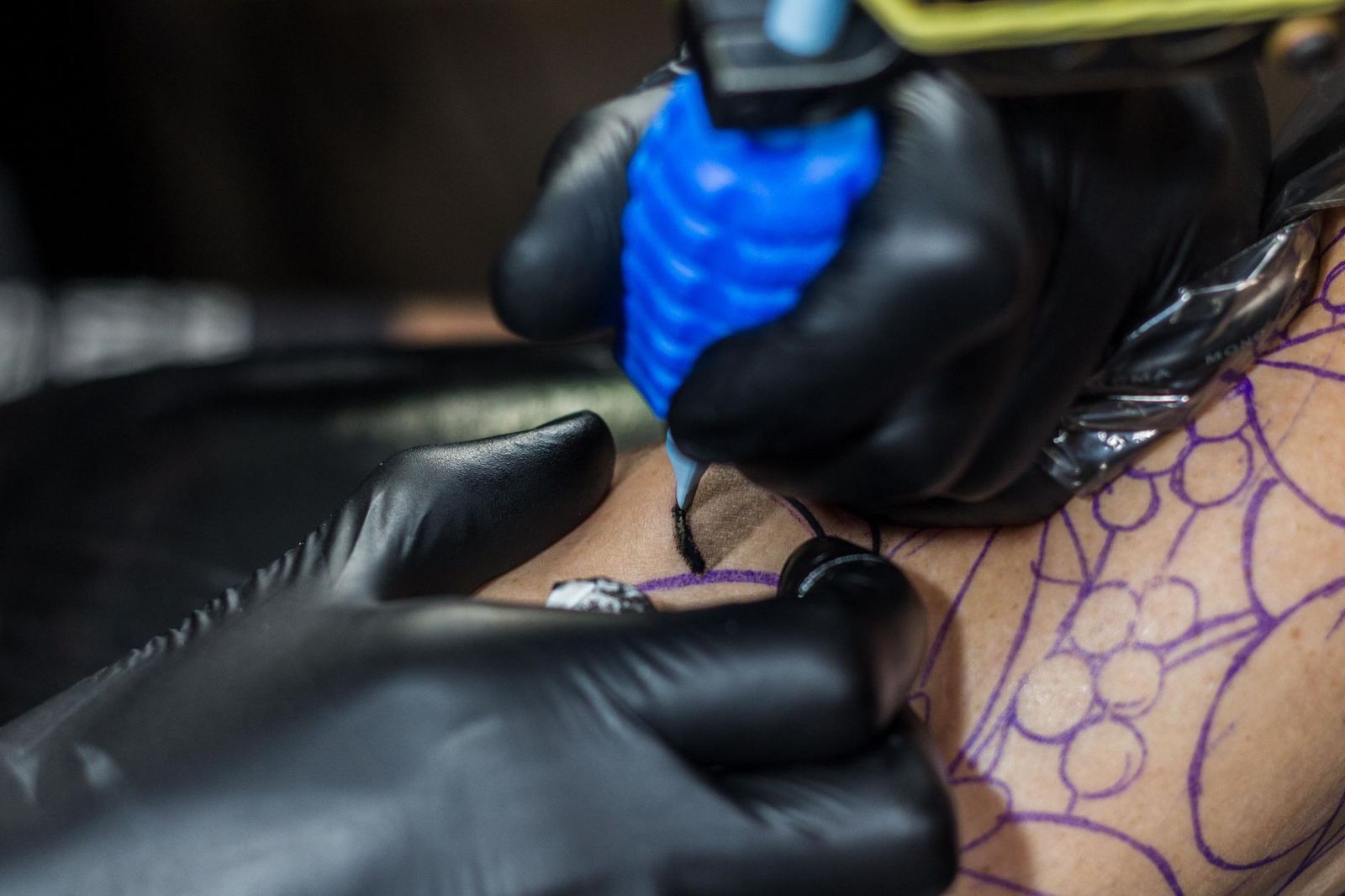
Common rockabilly tattoo themes
Wikipedia lists sailing ships, pin-up girls and dragons among Sailor Jerry’s well-known designs. He also frequently incorporated snakes, skulls, knives and roses.
Rockabilly wearers pick from that vocabulary and add period touches. Typical choices include:
- Pin-up girls: glamorous women in the sailor-flash tradition, which pairs naturally with vintage hair and rockabilly makeup.
- Swallows and sparrows: classic sailor symbols of travel and homecoming.
- Roses, hearts and daggers: motifs often rendered with bold outlines and simple shapes.
- Dice, cards and stars: gambling and luck imagery.
- Ships and anchors: the nautical core of the style.
- Cars and music symbols: hot rods, guitars and microphones that tie to the music itself.
Treat the car and music motifs as a modern fan habit, not a documented sailor tradition. Swallow meanings, such as the often-repeated mileage count, are folklore that varies by teller, so choose a swallow because you like it rather than because of a rule.
How the look spread beyond sailors
Wikipedia names Ed Hardy, Mike Malone and Zeke Owen as Collins’s protégés and friends, and says he wanted at least one of them to take over his shop. Malone bought the shop and its contents.
Collins’s flash drawings have since been shown in museum exhibits at the Musée du quai Branly in Paris and the Field Museum in Chicago. Since 2015, an independently produced annual Sailor Jerry Festival has honoured his legacy in Honolulu’s Chinatown.
Rockabilly fans adopted the look because bold flash sits well beside pompadours, denim and period clothing such as rockabilly dresses.
Choosing a design that suits you
A tattoo is permanent, so the planning matters more than the theme. Work through these steps:
- Pick a motif whose meaning you actually like, not just one that looks period.
- Study traditional flash and portfolios to learn the bold-line, limited-palette look, then bring references rather than asking for a copy of one artist’s work.
- Check the artist’s hygiene practices and local licensing before booking.
- Keep the design simple enough to stay readable as it ages; fine detail tends to blur.
- Think about placement. Forearms, calves and upper arms suit flash-sized pieces and can be covered or shown as you wish.
Be wary of copying a named artist’s flash exactly. Many traditional designs are shared motifs, but a living artist’s custom drawing is their own work.
Think about how the tattoo sits with the rest of your style. Rockabilly outfits are often built around short sleeves, rolled cuffs and high waists, which leave forearms and calves on show. A piece in those spots becomes part of the outfit.
Colour is worth a thought too. Traditional work leans on a few strong tones such as red, green, yellow and black. Those colours echo the palette of vintage clothing, printed fabrics and painted cars, so the tattoo feels at home with them.
Finally, consider building slowly. Many people start with one small, strong motif, live with it for a while and add to it later. A set of flash-style pieces can grow into a sleeve, but you decide the pace.
Aftercare matters as much as design. Follow your tattooist’s written instructions, keep the new tattoo clean, and protect it from strong sun once healed so the black lines stay crisp. If you are unsure about healing, ask a doctor or the studio.
Frequently asked questions
Are rockabilly tattoos the same as old school tattoos?
Show answer
Largely yes. Rockabilly tattoos draw on American traditional imagery, then add themes such as cars and music.
Who is Sailor Jerry?
Show answer
Norman Keith Collins (1911 to 1973) was a Honolulu tattoo artist known as one of the people who started the American Traditional style.
What do swallows mean in rockabilly tattoos?
Show answer
They come from sailor tradition as symbols of travel and returning home. Meanings vary by artist and wearer, so treat them as folklore.
Do I need a rockabilly tattoo to fit the scene?
Show answer
No. Plenty of fans have none; the style is a personal choice.