
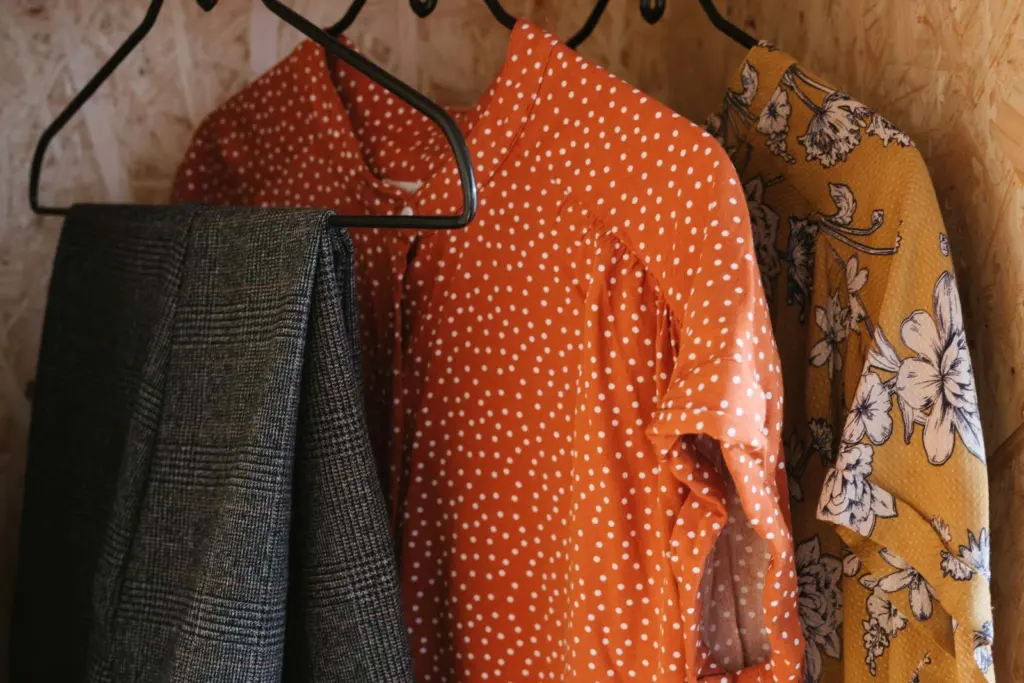
Standing in front of a rail of rockabilly dresses and not sure which shape is yours? Start with the skirt: full swing for dancing, slim pencil or wiggle for a sharper line. Both work.
This guide is part of our look at rockabilly style, and it focuses on the dress itself.
| Item | Key fact |
|---|---|
| Swing skirt | Full skirt flaring toward the hem; full-circle cuts are one version. |
| Wiggle skirt | Closely fitted from the waist down |
| Shared origin | Dior’s 1947 New Look |
| Shared bodice | Fitted, with the waistline at the natural waist |
| Wiggle back detail | A vent or kick-pleat so the wearer can walk |
Figures come from Collectif’s silhouette guide and Vintage Dancer’s pencil dress history. Both are retailer sites and their wording can change, so check them before you rely on the details.
What makes rockabilly dresses different from modern frocks
Rockabilly dresses are built around structure. The waist is marked, the bodice is fitted, and the skirt makes a clear shape, either wide or narrow, rather than hanging loosely.
That clear outline is what makes a dress read as vintage-inspired from across a room. Modern shift or A-line dresses often skip the defined waist, so they look softer and less styled.
When you shop, check the seams and darts around the bust. Careful shaping there is a sign that a dress is cut in the vintage manner, and it is what gives the nipped-in look.
Two silhouettes, one starting point
Collectif contrasts two 1950s styles: dresses with wide skirts and dresses with narrow, close-fitting skirts. Collectif links both styles to the defined waist and sculpted silhouette of Dior’s 1947 New Look.
That shared root is why the two dresses feel related. Both styles fit closely through the torso and emphasize the natural waist. The difference is everything below it.
Rockabilly borrows from this era, so most of the dresses you will find in the scene follow one of these two shapes. Pick by how you plan to move and how you want the outline to read.
The swing dress
The swing dress exaggerates the skirt. Collectif describes a circular skirt cut that creates increasing fullness toward the bottom.
Collectif’s guide adds that over a petticoat it gives the lifted, swinging volume associated with rock-and-roll dancing and pin-up photography. That makes it the practical choice if you plan to jive, because the skirt gives your legs room.
What to look for when you try one on:
- A bodice that fits closely at the bust and waist, so the skirt does the work of the volume.
- A hem you can move in without tripping on your own petticoat.
- Fabric with some body, such as cotton, so the flare holds its shape.
- Room in the shoulders and arms for dancing.
If you plan to dance, read our guide to rockabilly dance moves before you choose a skirt length.

The wiggle and pencil dress
Vintage Dancer says that today the slim style is known as a 1950s pencil dress or wiggle dress, and also as a sheath dress. Vintage Dancer describes both styles as having a closely shaped upper section that emphasizes the waist.
Below the waist, the skirt followed the wearer’s contours closely. Vintage Dancer explains that a rear opening or pleat allowed movement within the narrow skirt.
It is a sharper, more formal look than a swing dress. You trade easy movement for a strong hourglass line.
- Check that you can walk and sit before you buy; the back vent matters.
- Choose fabric with a little give if you want to dance in it.
- Wear it with a petticoat-free silhouette, so the line stays clean.
The look suits evenings, car shows and gigs where you will stand and pose more than spin.
Take care with length and stretch. A skirt that is too tight at the knee makes stairs a chore, so try a few steps, a stair and a sit-down in the fitting room.
A good tailor can ease a vent or take in a waist for you. Small changes of that kind often make a wiggle dress far more wearable than the size label suggests.
How do you choose between them?
Ask three plain questions. Will you dance? Do you want volume or a streamlined line? How much time do you want to spend on underpinnings?
- To dance freely: a swing dress with a circle skirt.
- A sleek, formal outline: a wiggle or pencil dress.
- A big, playful skirt: a swing dress over a petticoat.
- Less to pack and wear: a wiggle dress, with no petticoat needed.
None of this is a rule. Plenty of people own both and switch depending on the night.
Think about the whole day, too. A swing skirt with a petticoat takes up space on a bus, in a car and on a crowded dance floor, while a wiggle dress packs small but limits your stride.
If you are buying your first dress, a swing dress in a simple print is the forgiving option. The skirt hides small fit problems below the waist, and you can add or remove petticoat volume to suit the event.
Buying a second dress, a wiggle shape in a solid colour makes a good contrast. It gives you something smarter for nights when dancing is not the point.
Fit, fabric and finishing touches
Care matters as well. Follow each garment’s care instructions when choosing how to store it.
Because both shapes depend on a fitted bodice, fit at the bust and waist matters more than anything else. A skirt can be hemmed or a petticoat swapped, but a bodice that gapes will spoil either dress.
Prints are a big part of the appeal: polka dots, florals, cherries and gingham all read as rockabilly. Solid dark colours suit a wiggle dress well.
Then add the details that make the outfit:
- A petticoat for a swing dress, chosen for the volume you want.
- A narrow belt to mark the natural waist.
- Heels or flats you can dance in.
- Hair and a bold lip to match.
Many people finish the look with artwork too; see our piece on rockabilly tattoos if that interests you.
Frequently asked questions
Is a wiggle dress the same as a pencil dress?
Show answer
Yes, in everyday use. Vintage Dancer says the slim 1950s style is known as a pencil dress, wiggle dress or sheath dress.
Do I need a petticoat?
Show answer
For a full circle skirt, a petticoat is what produces the lifted volume. A wiggle dress is worn without one.
Which is better for dancing?
Show answer
The swing dress. Its full skirt gives room to move, while the wiggle skirt is closely fitted from the waist down.
Where does the shape come from?
Show answer
Collectif’s guide says both descend from Dior’s 1947 New Look, with its nipped waist and structured shape.